Everything LookFlex does
A face analysis you can check, a plan to act on it and a way to see what really changed. Each section says what runs on your device and what needs AI.
What needs AI, and what does not
The core of LookFlex runs on your device with no AI service at all. AI adds judgement on top, and two features depend on it entirely. When AI is not available, the app tells you.
Works without AI
- Face scan, live capture guide and quality check
- 16 facial measurements, each with a 95% margin
- Symmetry map, face shape and the skin read
- Glow Score, Potential and sub-scores
- Daily plan, streaks, progress and reminders
- Data export and delete
Better with AI
- The AI read: a second opinion on skin conditions, jaw softness, hair and grooming
- A written summary of your scan
- Without it, the scan uses a rule-based analysis and says so
Needs AI
- Coach chat
- Lab image previews
- If AI is off, these pause and the app says why
Face analysis you can check
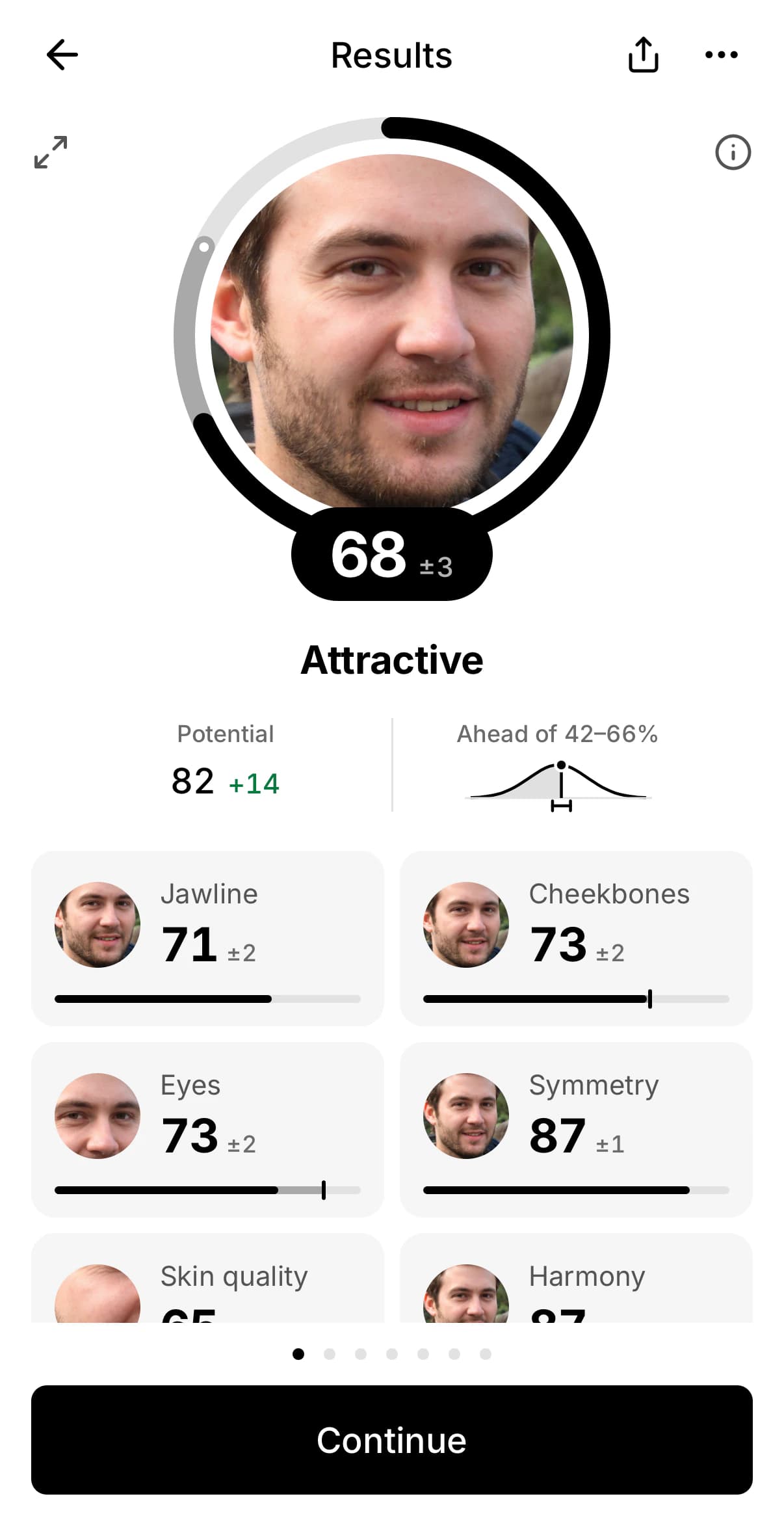
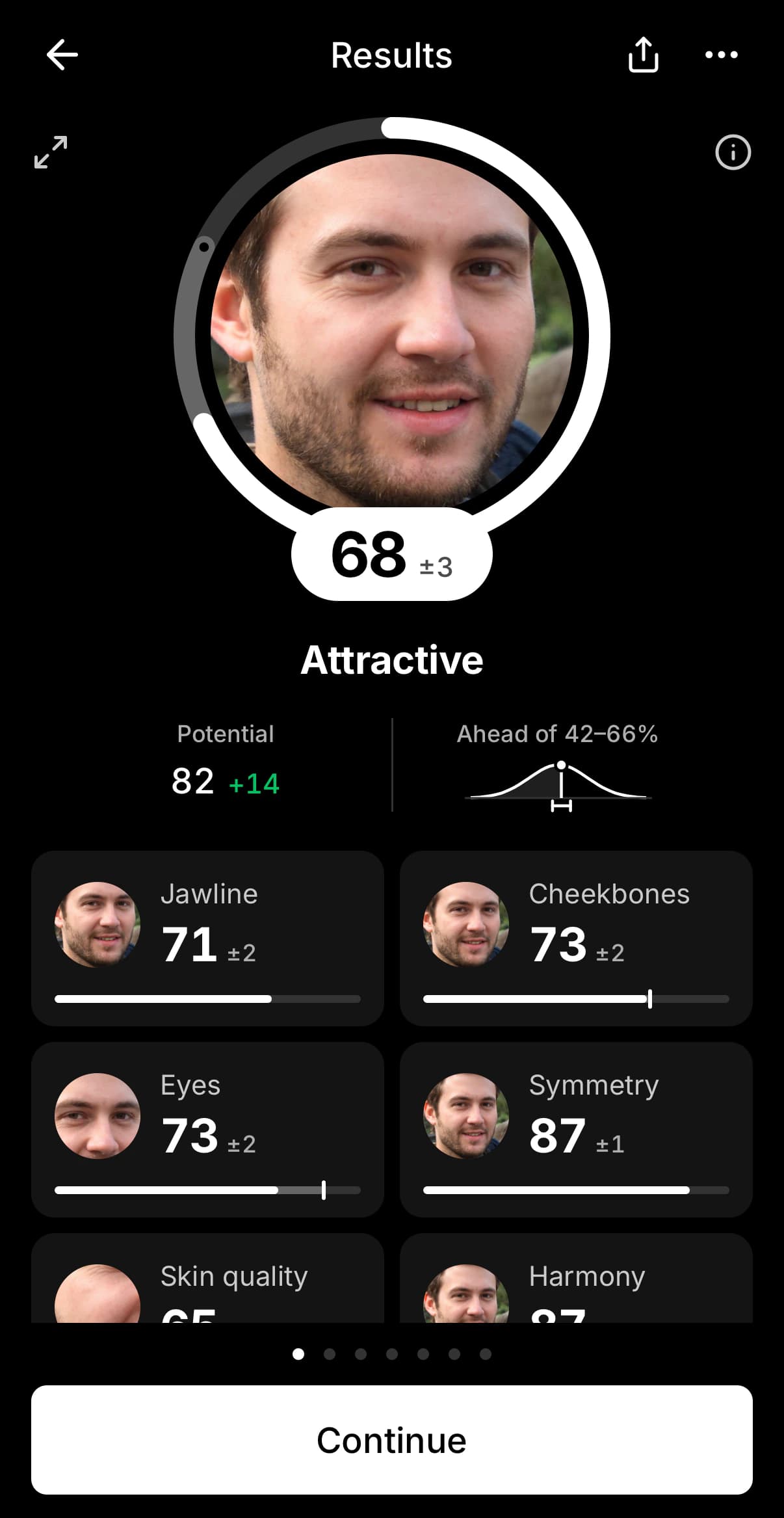
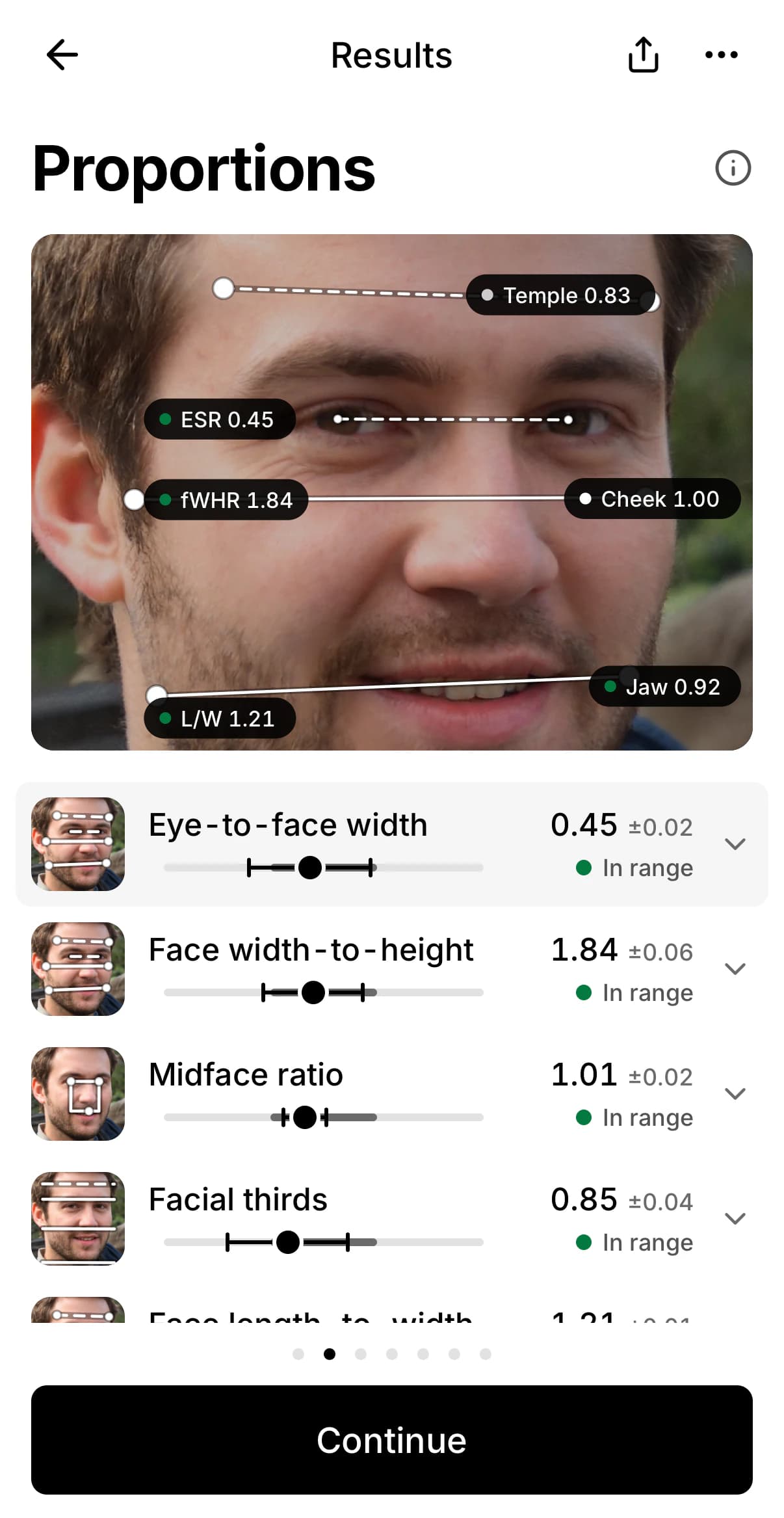
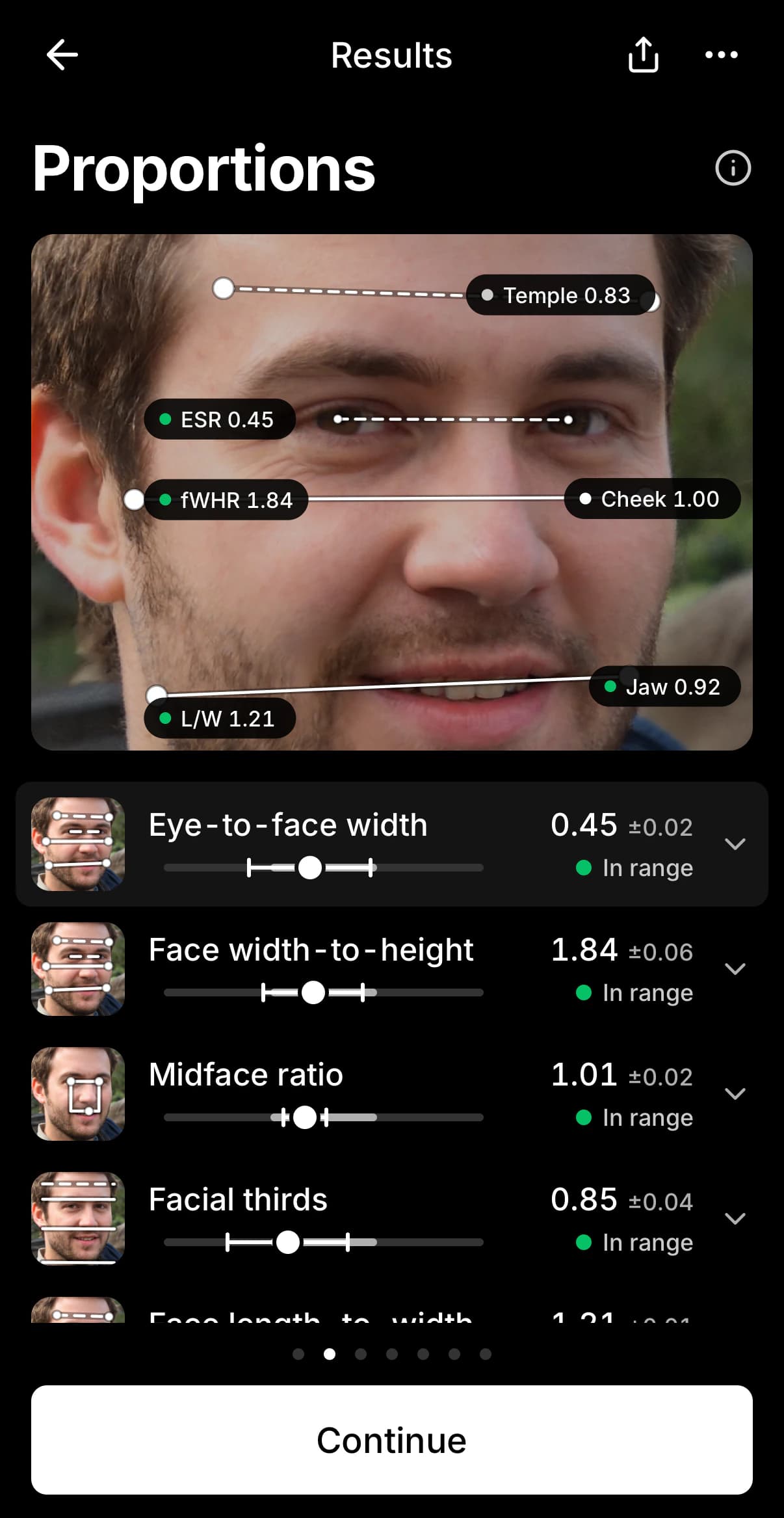
One selfie becomes sixteen measurements, six sub-scores and a Glow Score, each drawn on your own face with a margin that says how far a retake could move it.
- 478 landmarks found by an on-device model, then 16 proportions computed from them.
- Every reading comes with a 95% margin, estimated by measuring your photo three times: the standard way to put a range on a single score (Weir, 2005).
- Every measurement shows its value, how it compares with our reference set and what it means.
- A live guide for light, angle and distance, and a quality check that asks for a retake when a shot would skew results.
- Six sub-scores: jawline, cheekbones, eyes, symmetry, skin quality and harmony.
- Results lead with your top findings, ranked by impact, strength of evidence and how reliable the reading is, each with its sources.
- Potential is our model's Glow Score in one defined habits scenario, run through the same formula. A what-if, not a forecast.
- Every measurement page rates the research behind it as strong, moderate or limited, and lists its sources.
Landmarks, measurements and margins are computed on your device. When AI is available it adds a read of what geometry cannot see, within set limits.
A skin read relative to you
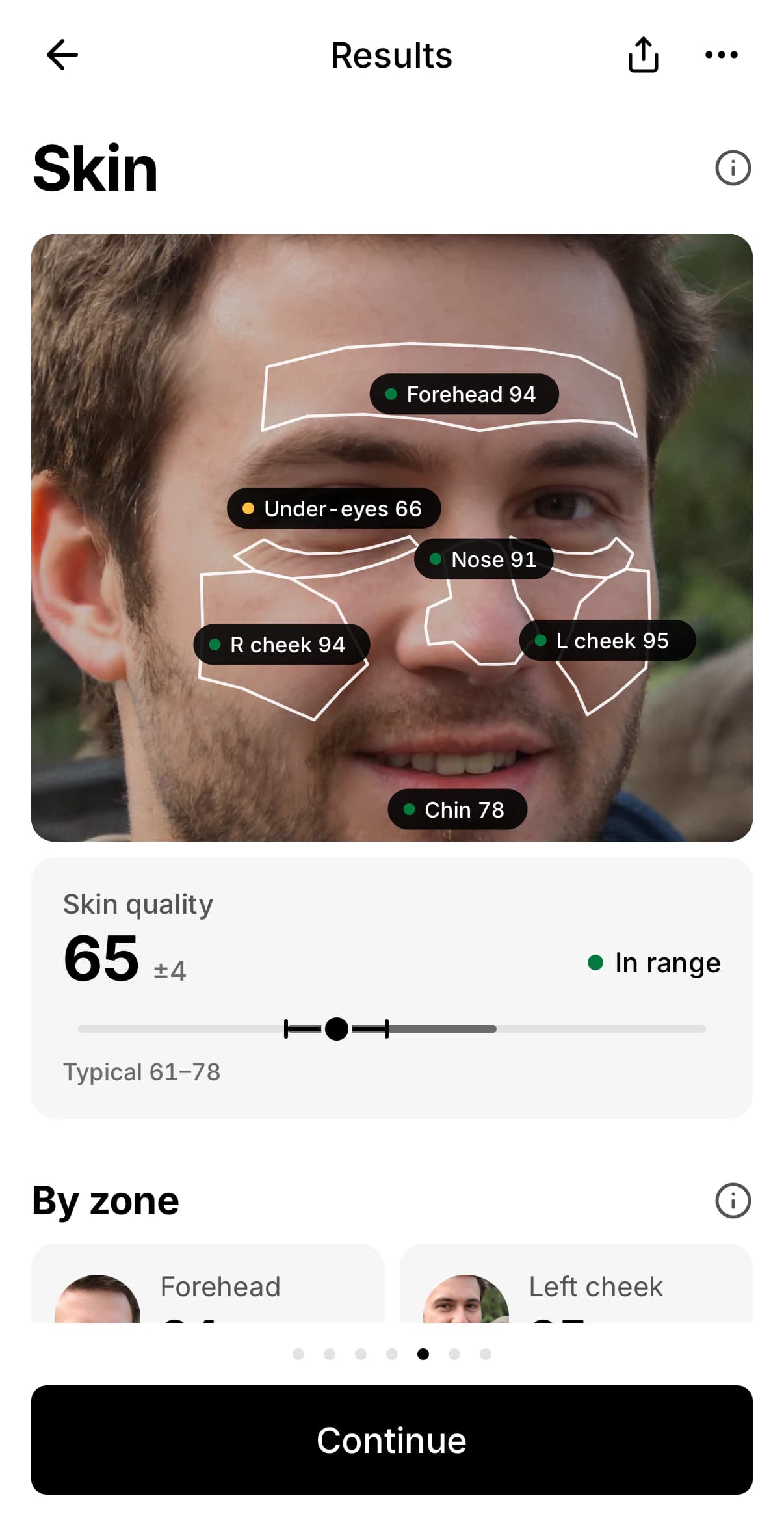
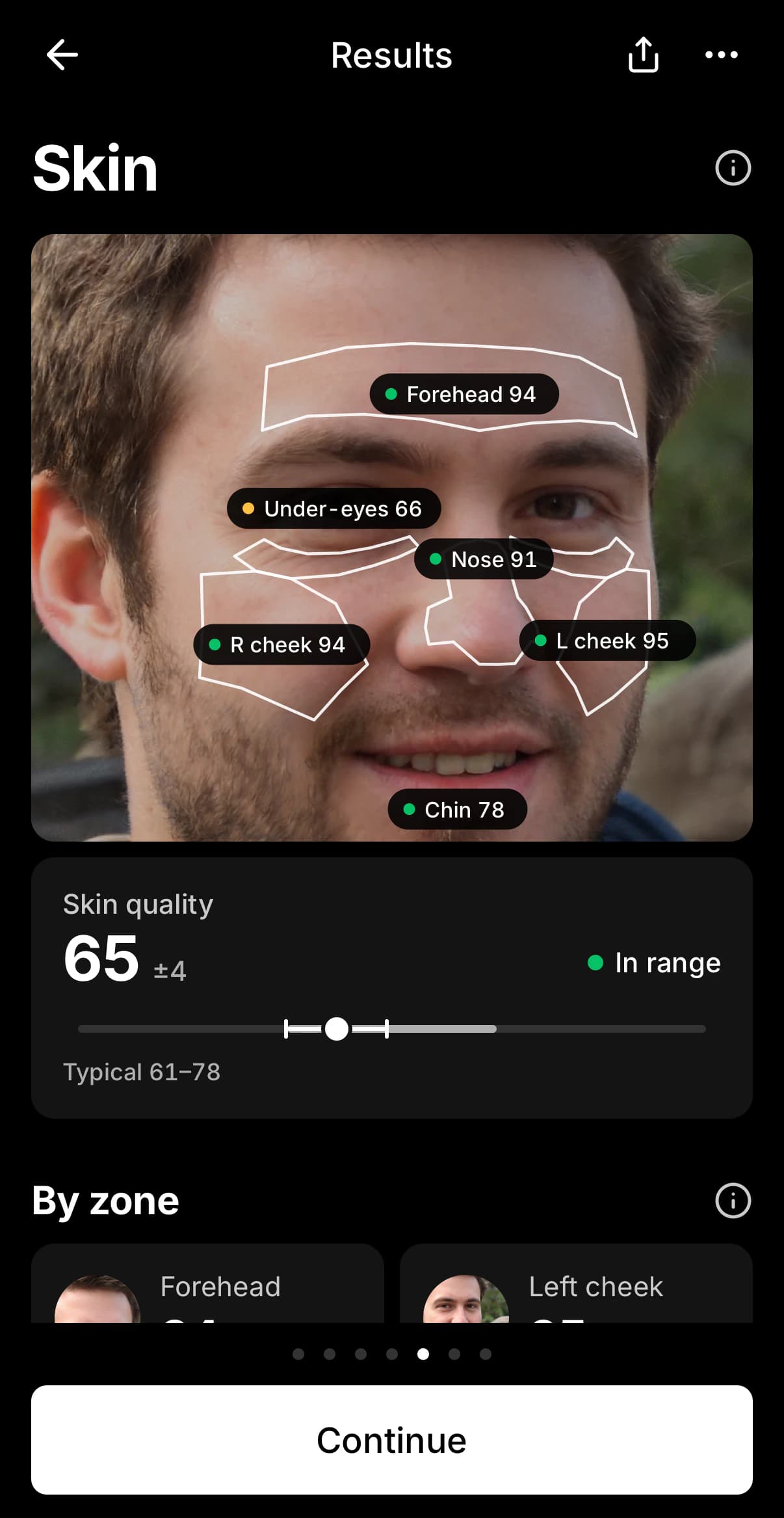
Six zones of your face are outlined and read for clarity, texture, evenness, redness, under-eye and oil balance.
- Zones: forehead, left cheek, right cheek, nose, chin and under-eyes.
- Each signal is compared with your own baseline across the face, never with an absolute brightness, so skin tone is not a flaw.
- Detected concerns come with simple steps, led by daily SPF: in a randomised trial, daily sunscreen users showed no detectable increase in skin ageing over 4.5 years (Hughes et al., 2013).
- It describes what is visible. It does not diagnose. For persistent, painful or changing skin, see a dermatologist.
The pixel read runs on your device. AI, when on, can refine it for things pixels underweight, such as active breakouts, and note when lighting limits the read.
Face shape and style
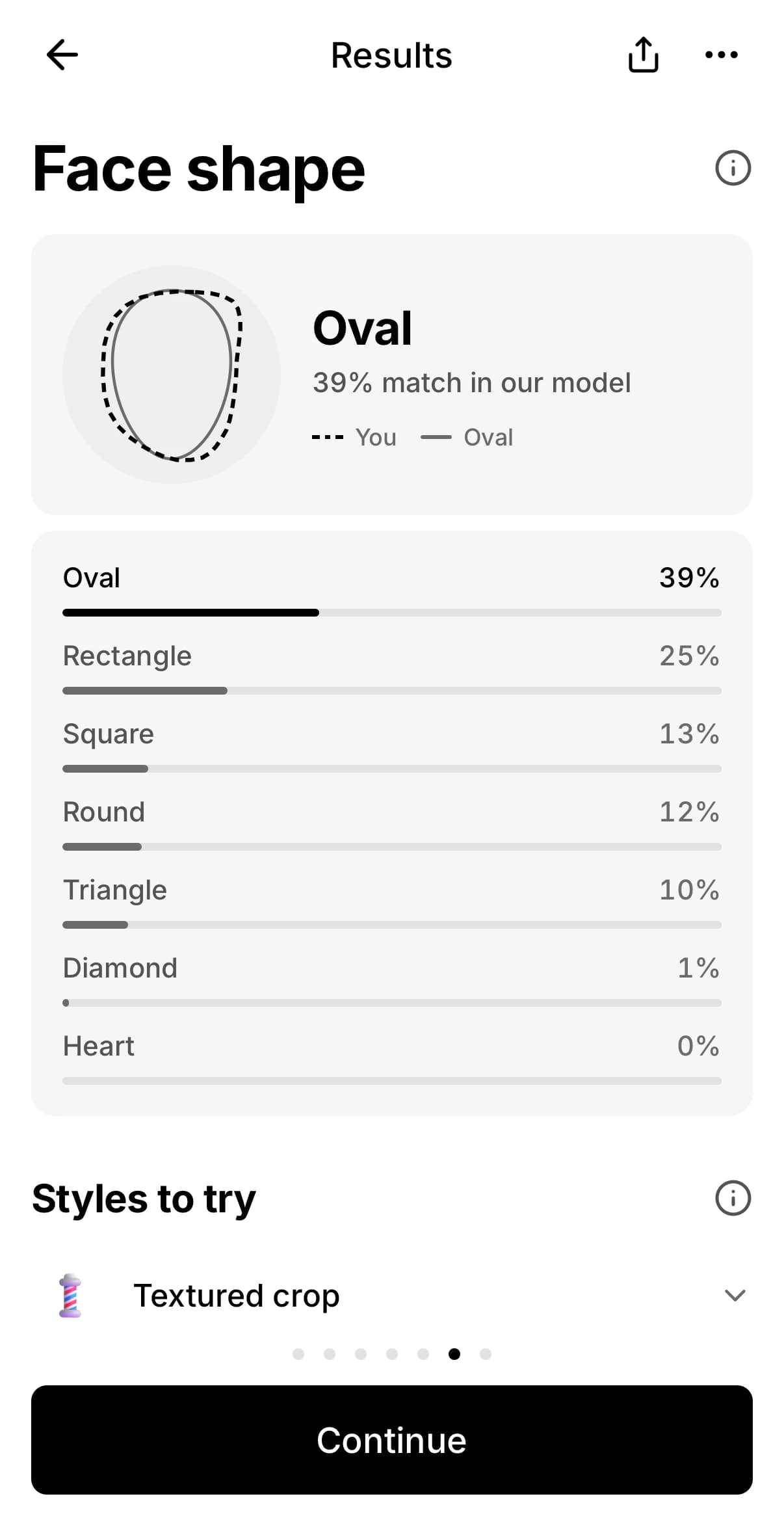
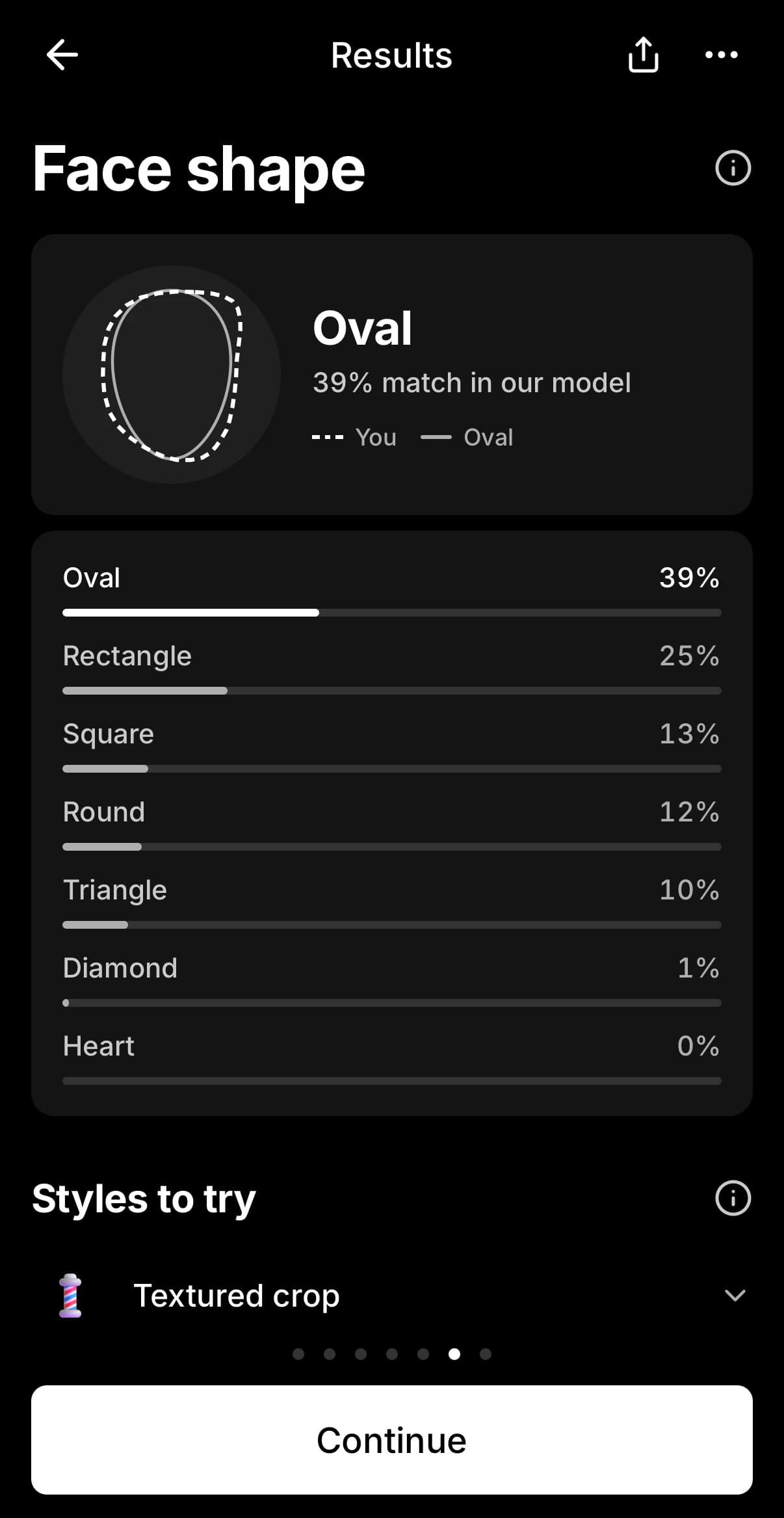
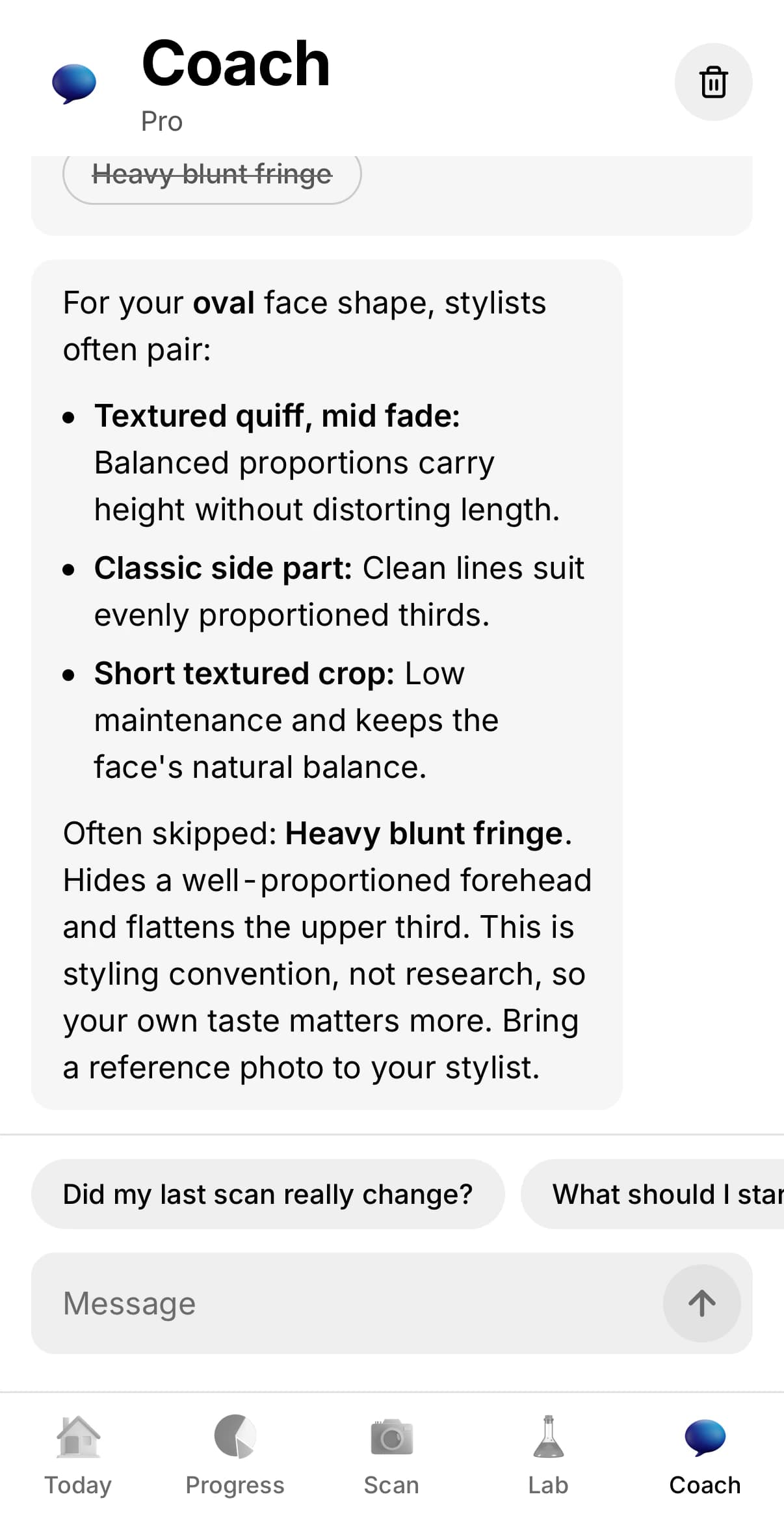
A match percentage for each of seven face shapes, with hairstyles to try and to avoid, from common styling convention.
- Oval, round, square, rectangle, heart, diamond and triangle, each scored as a probability.
- Hairstyle suggestions matched to your shape. They follow common stylist conventions, not research findings.
- Shape describes proportions. It is not a ranking of faces.
Shape probabilities and hairstyle ideas come from your measurements and a built-in style library.
A daily plan built from your scan
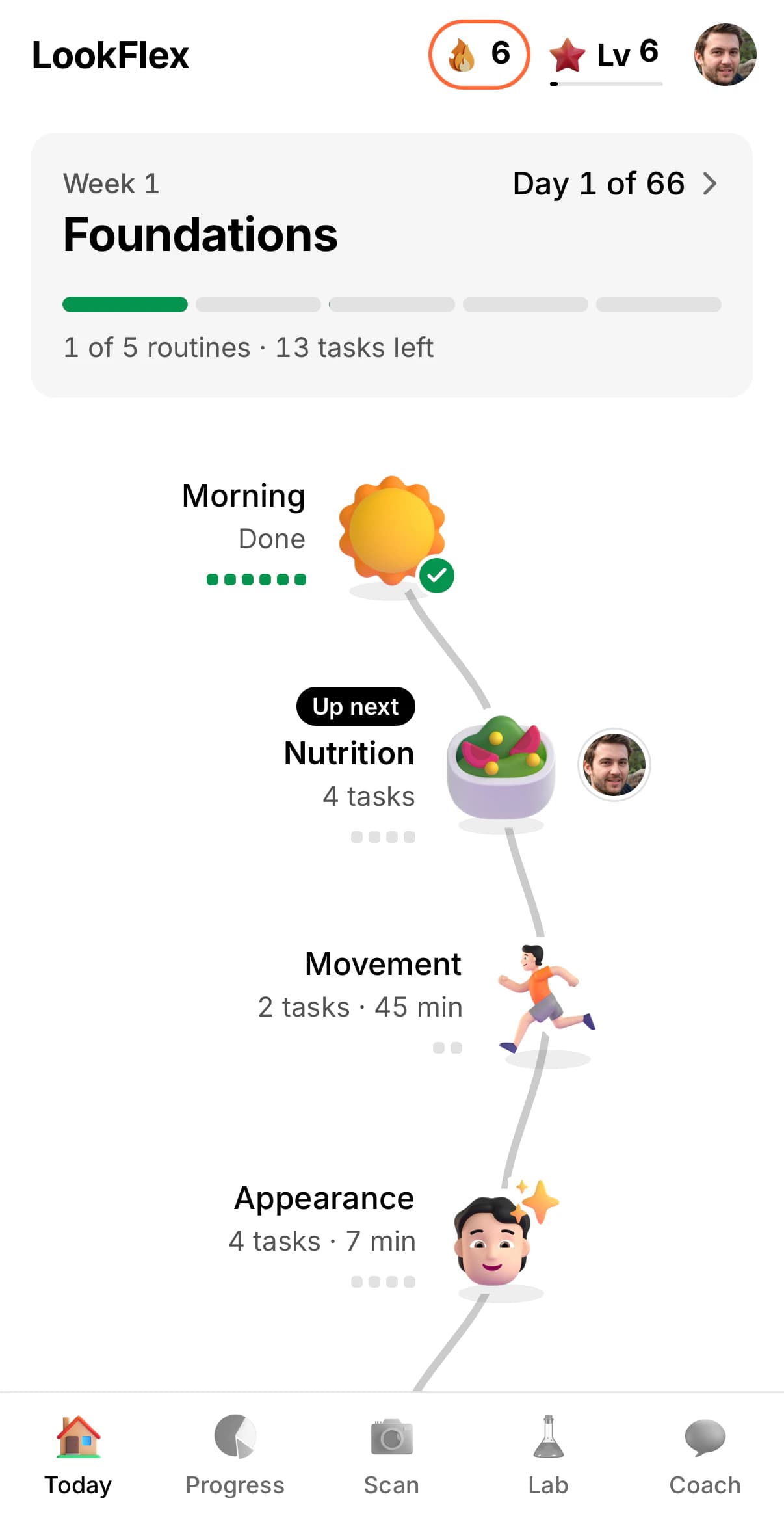
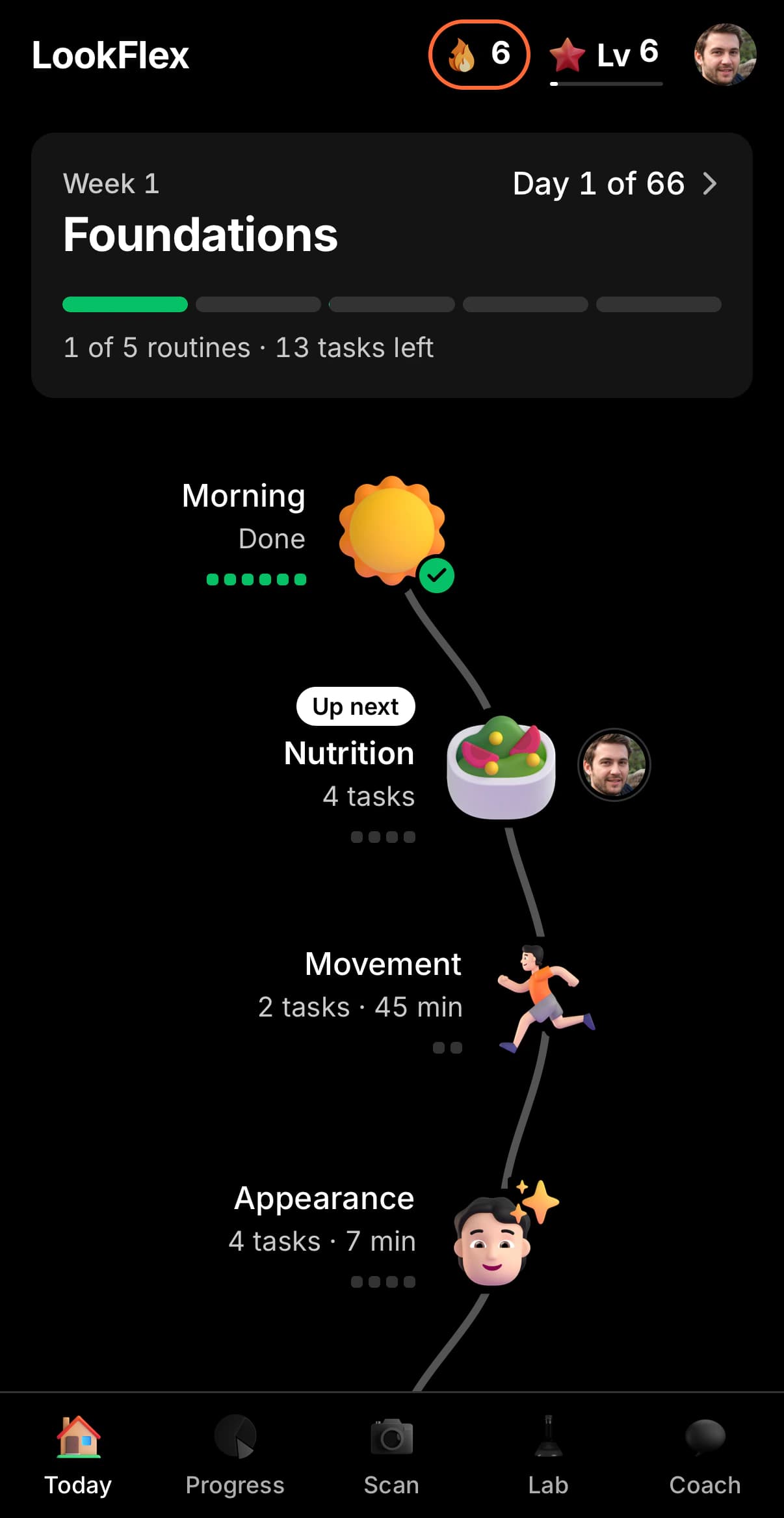
Your findings become small daily steps you can check off, so the analysis turns into habits.
- Five routines: morning skincare, evening skincare, nutrition, movement and appearance.
- Steps target what habits can move, such as skin and under-eye brightness, plus grooming and training, and each one cites its sources or says it is guidance.
- The same small steps every day, because repetition in a consistent context is how habits become automatic: in one study, that took a median of 66 days (Lally et al., 2010).
- XP, streaks and levels reward showing up. Game elements gave a small-to-medium boost to physical activity in trials (Mazeas et al., 2022); here they track effort, never looks.
- Built on advice we can cite or label as guidance: daily SPF, gentle skincare, sleep, enough protein, training and posture.
Plans are built on your device from your answers and scan, and AI adds personalised tips when it is on. Free includes 2 of 5 routines; Pro unlocks all of them.
A coach that has read your results
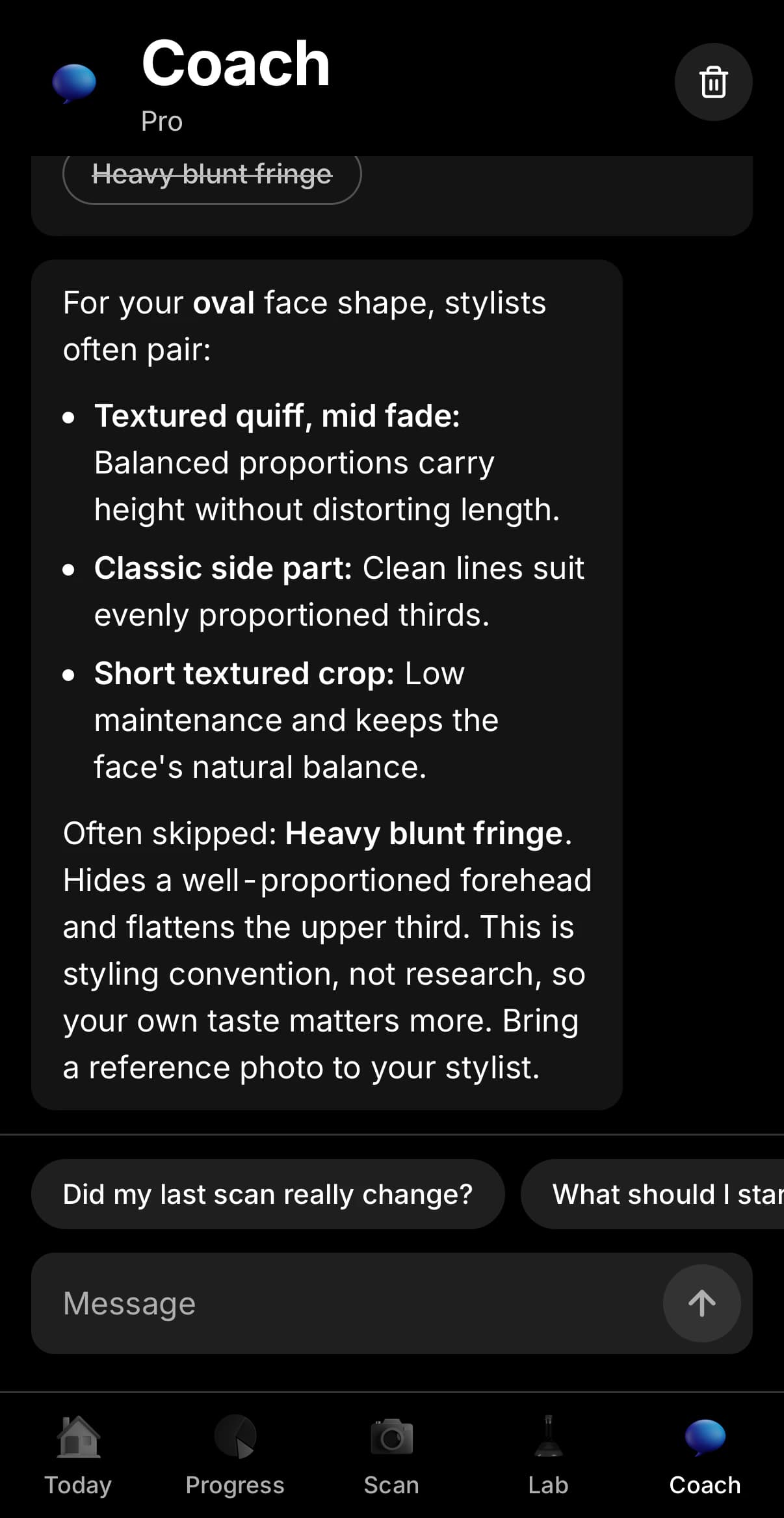
Ask what to fix first, which haircut suits your face shape or how to build a routine. Answers draw on your own measurements, plan and progress.
- Streaming chat with suggested questions to start from.
- Uses your latest scan, plan and streak as context.
- Safety rules built in: no bone-smashing, mewing, steroids, SARMs, peptides, DIY fillers, crash diets or guarantees.
- Teens aged 16 and 17 get healthy-habit guidance only, with no procedures and no diet advice.
The coach needs the AI service. If AI is off, the chat says so rather than inventing answers. Free has 3 messages a day; Pro up to 100.
Lab: picture a change before you commit
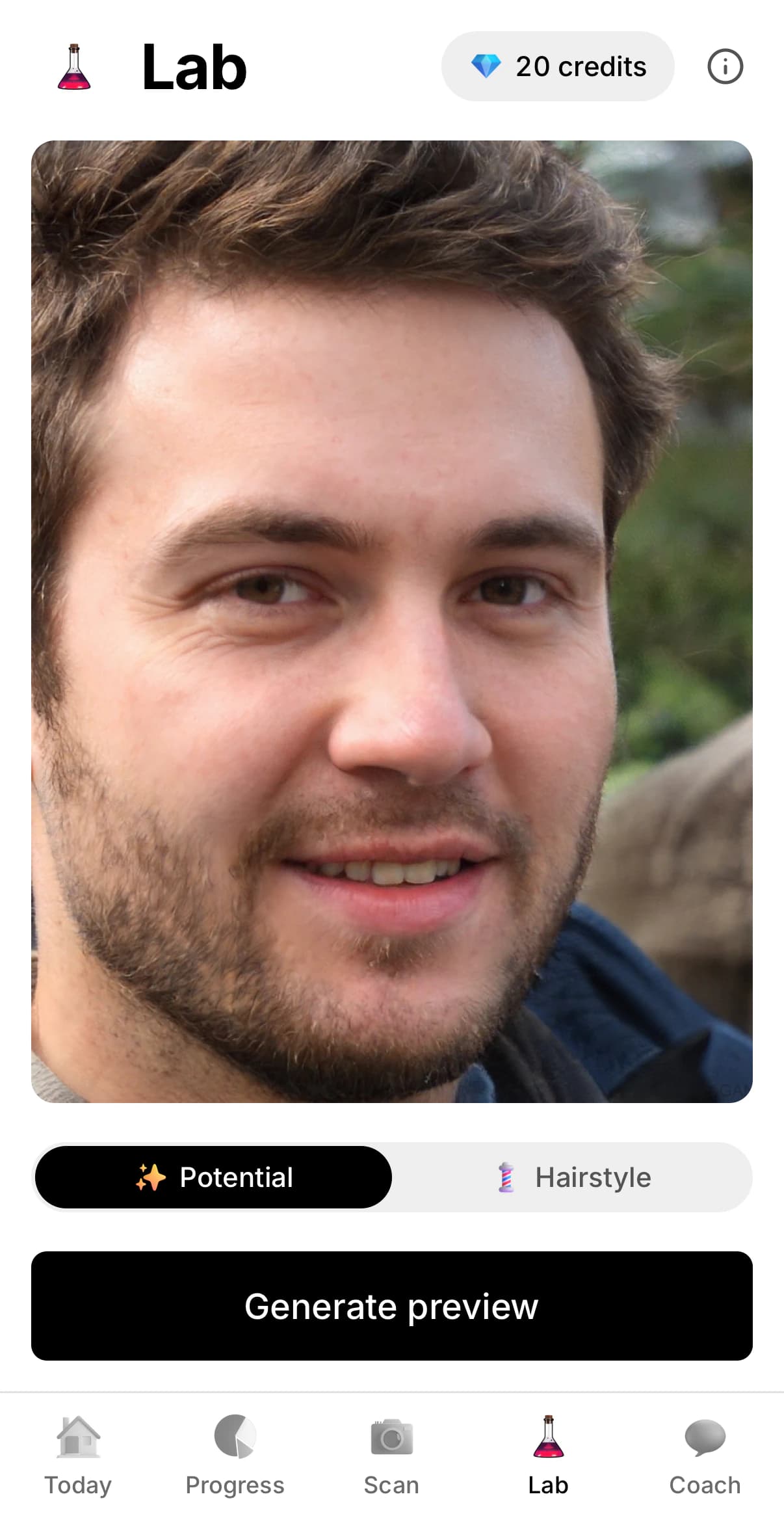
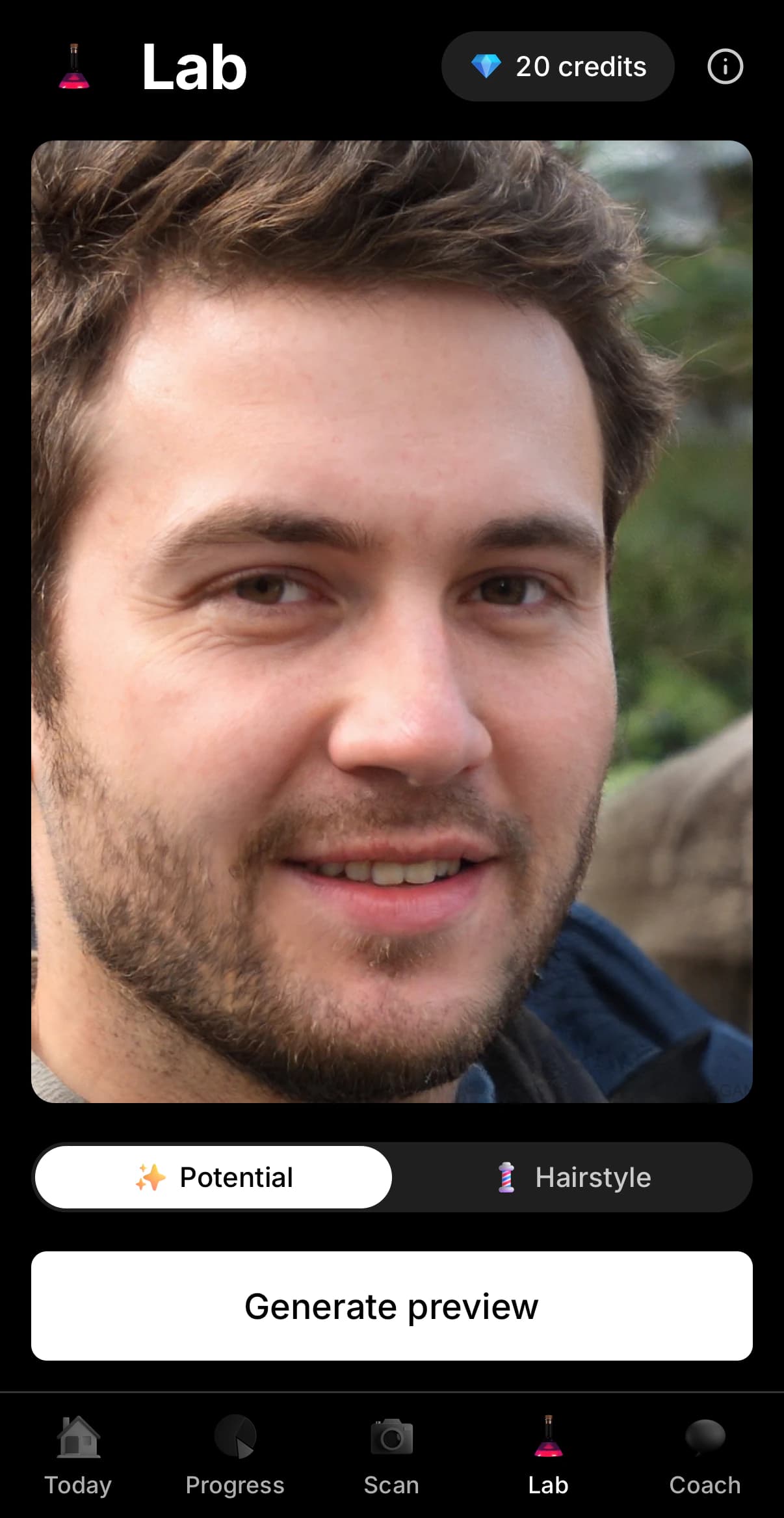
See an AI illustration of possible changes, or try a hairstyle on your own photo.
- Two modes: an illustration of skin and rest changes, and a hairstyle try-on with styles that styling convention pairs with your face shape.
- A before and after slider, and save or share when you are happy.
- Always labelled as an AI illustration. It is not a prediction, a promise or a medical outcome.
Lab needs AI image generation. Each preview uses one credit: you get one free when you sign in, and Pro tops you up to 20 every 30 days. When you generate, your photo is sent to our image provider for that request only.
Progress you can actually trust
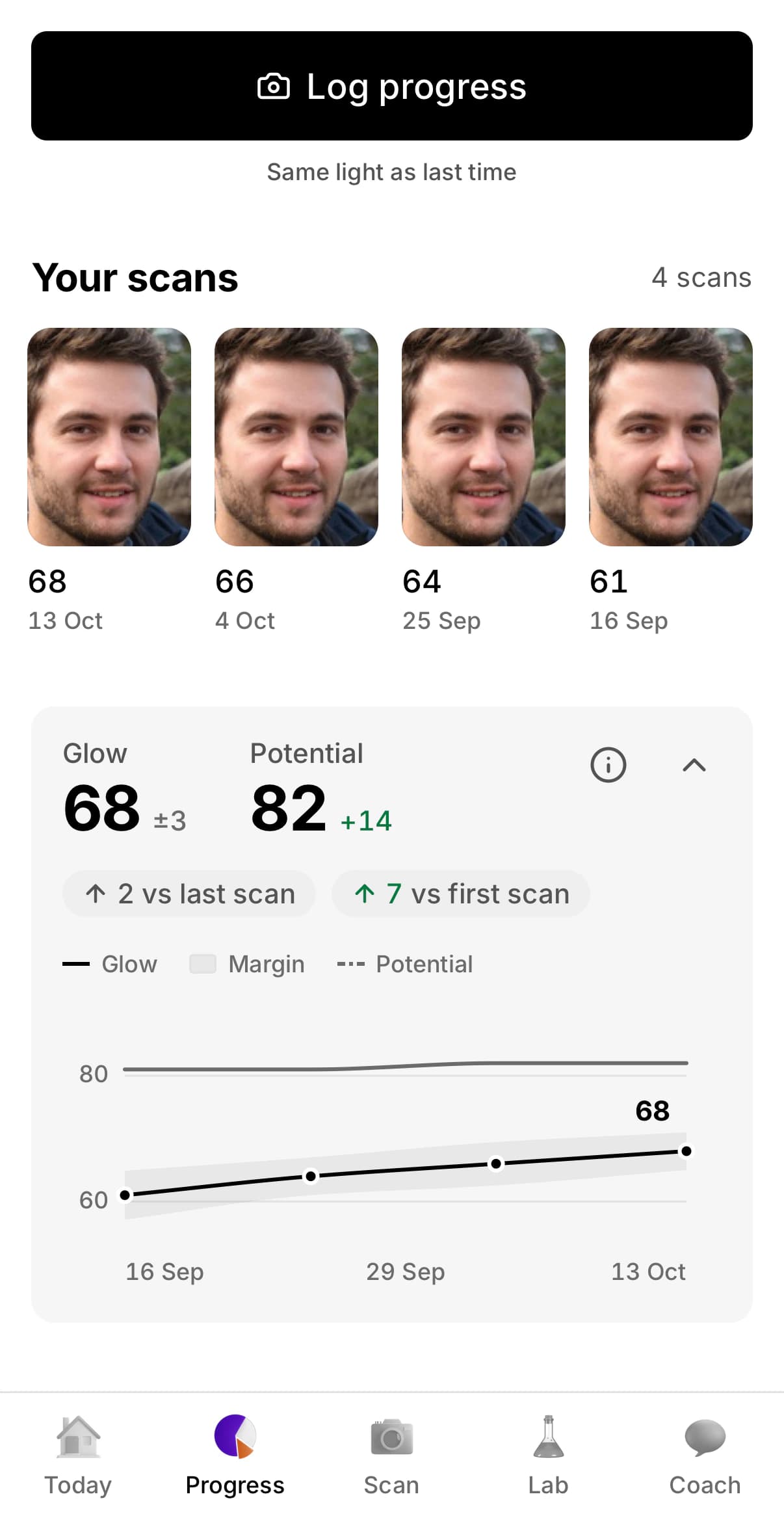
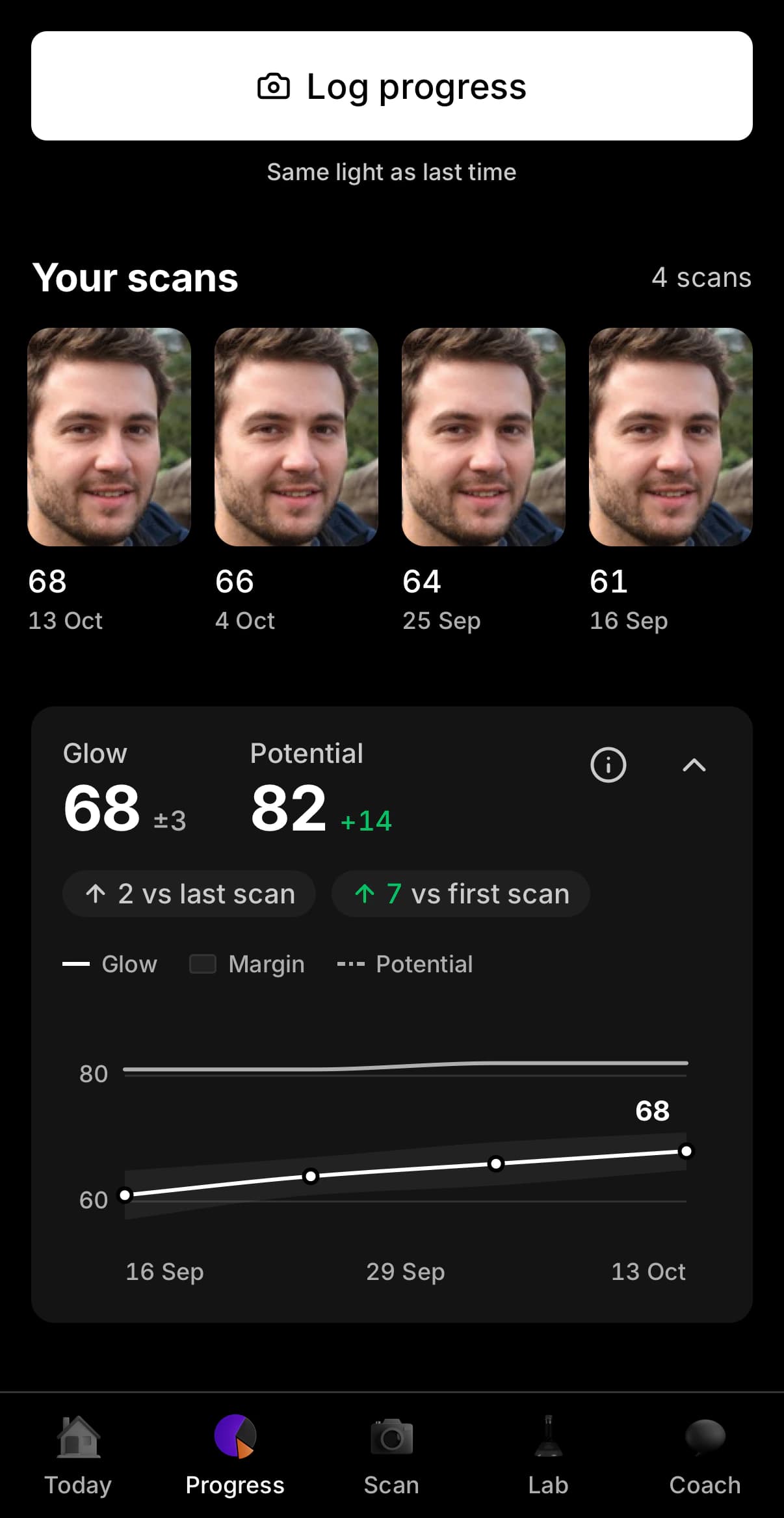
Rescan and compare. LookFlex shows which readings changed by more than their margins, and warns you when two photos were taken in conditions too different to compare.
- A change counts only when it is bigger than both scans' margins combined, the usual yardstick for tracking change in one person (Weir, 2005; de Vet et al., 2006).
- Each scan records its light, angle, distance and expression, so a comparison can tell you when two photos are not like for like.
- Trend lines, a before and after slider for any two scans and a 12-week activity calendar.
- Tracking is part of the method: in a meta-analysis of 138 trials, monitoring progress helped people reach their goals (Harkin et al., 2016).
- Levels and XP that track consistency.
Everything here is calculated on your device from the scans stored there.
Reminders and your data
Calendar reminders
Pick a morning and an evening time and LookFlex makes a calendar file with daily repeating events. Add it to any calendar app. These are calendar events, not push notifications. Tying a routine to a set time and cue is an if-then plan, which helped people follow through across 94 tests (Gollwitzer & Sheeran, 2006).
Export and delete
Export your data as a file (without photos), or delete your account and erase everything from your device in a couple of taps. An account is optional. Our servers never keep your photos, and they keep your results only if you sign in and keep backup on.
References
Every DOI was checked against Crossref. The evidence label says how much weight a source can carry alone. See how we choose sources on the research page.
- de Vet HCW, Terwee CB, Knol DL, Bouter LM (2006). When to use agreement versus reliability measures. Journal of Clinical Epidemiology. doi:10.1016/j.jclinepi.2005.10.015Strong evidenceMethod or technical report
- Gollwitzer PM, Sheeran P (2006). Implementation intentions and goal achievement: a meta-analysis of effects and processes. Advances in Experimental Social Psychology. doi:10.1016/S0065-2601(06)38002-1Strong evidenceMeta-analysis
- Harkin B, Webb TL, Chang BPI, et al. (2016). Does monitoring goal progress promote goal attainment? A meta-analysis of the experimental evidence. Psychological Bulletin. doi:10.1037/bul0000025Strong evidenceMeta-analysis
- Hughes MCB, Williams GM, Baker P, Green AC (2013). Sunscreen and prevention of skin aging: a randomized trial. Annals of Internal Medicine. doi:10.7326/0003-4819-158-11-201306040-00002Strong evidenceRandomised trial
- Lally P, van Jaarsveld CHM, Potts HWW, Wardle J (2010). How are habits formed: modelling habit formation in the real world. European Journal of Social Psychology. doi:10.1002/ejsp.674Moderate evidenceCohort study
- Mazeas A, Duclos M, Pereira B, Chalabaev A (2022). Evaluating the effectiveness of gamification on physical activity: systematic review and meta-analysis of randomized controlled trials. Journal of Medical Internet Research. doi:10.2196/26779Moderate evidenceMeta-analysis
- Weir JP (2005). Quantifying test-retest reliability using the intraclass correlation coefficient and the SEM. Journal of Strength and Conditioning Research. doi:10.1519/15184.1Strong evidenceMethod or technical report